
Introduction
People fail to recognize the value of table coasters which serve important functions throughout homes, cafés, bars, and offices. The items create surface protection, better display, mess control, and silent system maintenance within a room. Small product, serious utility.
Most people only think about a coaster when they notice a water ring on a wooden table or a coffee mark on a polished surface. The damage has begun to progress at that point. A small problem has the potential to develop into fading, swelling, staining, and surface dullness through time. The product exists because of this requirement. It does not just catch drips. It protects furniture while maintaining cleanliness and providing a complete appearance to table arrangements.
The situation contains an additional dimension. The right coaster selection brings hidden benefits to room ambiance. The drink presentation achieves better results through its use in restaurants and hospitality environments. The tool maintains office workspaces in an orderly state while presenting a polished appearance. The branding element maintains user interest throughout the entire duration of beverage consumption because it remains visible to users.
The problem is that many buyers make rushed decisions. They buy something cheap, too thin, too slippery, too decorative, or simply wrong for the setting. The item develops multiple issues which include bending and staining and glass adhesion and table scratching and showing wear within weeks. The guide explains the topic through its proper breakdown.
The guide explains which materials to select for good coasters and which shapes and finishes to use and which product locations provide maximum value and which errors to avoid when creating both functional and aesthetically pleasing results.
Why This Small Product Has a Bigger Role Than Expected
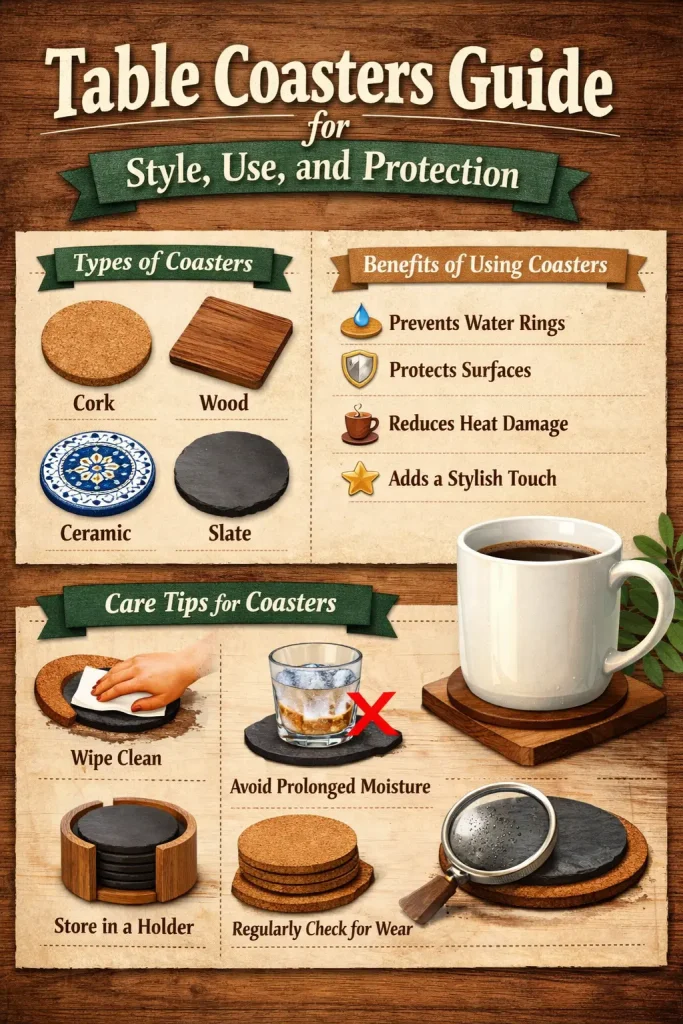
People commonly use coasters as table decorations but this practice does not reflect their true value. The main purpose of the product creates protection through its design which stops liquids from reaching the underlying material. When people drink cold drinks they produce water droplets through the process of condensation. The hot mugs release their heat to their surroundings which creates a danger to furniture. Both items will cause gradual harm to furniture because they lack proper support.
The primary advantage of the product provides protection to users.
A good coaster supports cleanliness by giving drinks a defined place to land. The moisture stays contained because it does not travel across the table. The busy areas show a noticeable improvement through this system. The system maintains service areas in neat condition while it reduces desk clutter and dining spaces remain organized.
The presentation of the material receives support from this element. A drink served without a base looks casual at best and careless at worst. A drink placed on a clean, well-made coaster looks more intentional. One simple modification creates a complete alteration for the environment.
The best table coasters also help with:
reducing surface wear over time
protecting polished and porous materials
organizing beverage placement on busy tables
improving the visual finish of a table setting
supporting branded hospitality or event presentation
The broad accessibility of these solutions exists because they can function in various environments. They are useful in homes, restaurants, offices, lounges, hotels, cafés, events, reception areas, and promotional setups. The function of the product exists to address a basic problem. The visual design of the space creates an environment that appears more organized and maintains a peaceful atmosphere.
What Makes a Good Coaster Actually Good
Roller coasters show different operational results, despite their identical appearance on the internet. A good one balances function, feel, and finish.
The first thing to assess is stability. The object must maintain a level position on the table while providing reliable support for both glasses and mugs. The object already fails to perform its main function when it starts to lean or curl or display uneven surfaces.
The second factor is surface compatibility. Some coasters absorb moisture well. Some materials together with their components create products which deliver better moisture resistance. Some materials create soft surfaces which provide protection for fragile wood furniture. Products require backing to protect their polished surfaces from potential scratches.
The next aspect to evaluate product performance involves its ability to maintain functionality across multiple uses without developing permanent damage from condensation after two instances. The object should display solid weight when held because it should not feel like a flimsy item which people throw away except for purposes which need that specific functionality.
The characteristics listed below should be used to evaluate product quality:
The material maintains its original thickness
The edges have been finished to achieve a neat appearance
The table surface provides proper grip
The product maintains reliable moisture protection
The product includes furniture-safe backing which should be applied to specific areas
The product requires simple upkeep
The finish matches the requirements of the particular environment
The best table coasters are not just nice to look at. They hold up under actual daily use. The product functions as a necessary item because it differs from decorative elements.
Choosing by Material
The choice of material determines which materials provide the best performance results. The material selection process determines the product’s ability to absorb moisture, its overall strength, its visual appearance and its manufacturing expenses. Different environments need different answers, so there is no one-size-fits-all pick.
Cork
Cork serves as an essential material for daily use. The material has a light weight and natural appearance which provides protection to furniture. The design achieves its purpose because it delivers three benefits. The material provides a gentle touch to eyewear.
The product has a secure hold on objects. The product delivers a friendly and inviting appearance. The design functions effectively in residential spaces and informal dining establishments. The product shows two main restrictions. The product will develop stains after extended periods of usage. The material will deteriorate after repeated use.
The material requires proper finishing to achieve its best performance in high-end fashion applications. The practical needs of daily use make cork an ideal functional material which maintains safety standards.
Wood
Wood provides a better visual appearance because it creates a more elaborate design. The material is appropriate for residential spaces and high-end tourism environments and presents commercial gift options. Appropriate grain selection together with proper finishing methods will create a more substantial coaster experience.
The solution succeeds because it has a warm elegant visual effect and its durability matches sealed materials and its surface supports engraving and custom design work. The system has two restrictions which include The system has two restrictions which include The system has two restrictions which include The system needs periodic maintenance. The construction process uses wood as its primary material.
Wood requires proper construction handling to achieve optimal results. Wood defects become visible in inexpensive wood products after brief usage.
Paperboard
Paperboard serves as the primary material for bars, restaurants, and events, which use it for their high-volume operations. The material provides an economical solution through its ability to be printed and its capacity to soak up liquids.
Why it works:
The product meets requirements for high-volume purchases
The product provides effective brand identification
The product serves temporary needs through its ability to be discarded
The product effectively manages water vapor from beverages
Limitations:
The product lacks design for multiple times of use
Extended contact with water will make the material lose its strength
The product has a different tactile experience than high-quality materials
The solution functions as an intelligent choice because it matches both event requirements and bar operations and promotional distribution needs through its ability to handle large quantities of work.
Stone, Ceramic, and Marble
The materials become premium products through their initial touch which shows their value. The materials add weight to their appearance which becomes more important in formal homes and upscale environments.
The system succeeds because of three factors.
The combination of these elements produces
The product provides extended use through its
The product features
The system has three main limitations.
The system needs an additional connection which creates a permanent link to its base.
The system requires a larger weight capacity than its current installation supports.
The system requires specialized training because its operation depends on advanced understanding.
The most important detail about the situation concerns the backing material. The beautiful surface material becomes useless when the underside damages the furniture.
Acrylic and Resin
People select these options because they want to achieve modern design elements together with their personalized graphics and their desire for a polished appearance. The design operates successfully because it shows clear visual details which people can maintain with minimal effort while the product serves modern environments and provides design flexibility. The product has two main limitations because it can develop scratches and it needs to maintain its original appearance for use in spaces that require constant traffic. The product performs better in situations where appearance holds primary importance because it needs to control moisture.
Size, Shape, and Finish Matter More Than People Think
People often focus on material and ignore proportion. That is a mistake.
A coaster needs to measure proper size because small dimensions create problems when supporting larger glasses and mugs. The coaster appears weak because its thin design makes it less durable despite displaying attractive prints. Round shapes maintain a connection to time while offering multiple design possibilities. Square shapes provide a modern appearance through their organized design. The product requires custom die-cut shapes for both events and promotional purposes, but their implementation needs to maintain design readability and product function.
Finishing changes perception too.
A matte finish usually looks cleaner and more refined. The material decreases glare while providing users with a more expensive product experience. Gloss finishes can work for vibrant graphics, but they can also feel too loud if overdone. The textured finishes provide surfaces which enable users to maintain grip while experiencing tactile sensations, which serve practical purposes in both hospitality and home environments.
The best table coasters are sized properly, finished cleanly, and shaped in a way that fits the environment rather than trying too hard to stand out.
Where They Add the Most Practical Value
However, this product comes in handy at a particular time, under appropriate circumstances.
Homes
Coasters serve two purposes at home which include protecting furniture and creating an upscale atmosphere. The surfaces of coffee tables, bedside tables, dining tables, and desks require protection from damage. The solutions provide better organization for everyday tasks without creating extra clutter.
Offices
The office spaces implement measures which stop mug marks from occurring while they keep their workspaces neat and present a planned visual arrangement. The system enhances beverage display in both meeting rooms and reception areas.
Cafés and Restaurants
In dining environments, they help keep tables cleaner between service cycles and support the overall guest experience. The table display requires these elements because they complete its final appearance.
Bars and Lounges
The most critical point for measuring absorbency performance exists at this location. The solution contains three main components which include drinks and sweat and tables that are able to turn during fast movements. The material proves effective in this situation because paperboard products deliver both cost efficiency and practical use and branding possibilities.
Events and Promotions
Coasters serve dual purposes at weddings plus product launches plus exhibitions plus brand events because they function as both practical items and advertising surfaces. The existing functional capacity of coasters enables them to display names plus event themes plus dates plus taglines plus sponsor branding without appearing unnatural. The table coasters serve dual functions as protective equipment and quiet elements that improve customer experiences.
Their Quiet Power in Branding
Most promotional products either get tossed aside or disappear into drawers. Coasters function differently because they stay visible to people who sit down and stop moving for their complete time in the area.
The branding element executes its task of delivering advertising value.
A coaster that designers build to high standards enables users to display their brand through essential product information and event details and their artistic vision. In hospitality, this matters. In cafés, bars, restaurants, hotels, and corporate events, the branding sits right under the user’s drink for several minutes at a time.
That provides actual brand exposure.
The design needs to maintain its disciplined framework which acts as the core requirement for successful execution. The most frequent branding errors occur when designers make two mistakes which include leaving the artwork area too crowded and entering the artwork area through their design elements which they should have left untouched.
The best method to solve this problem requires three design principles to be maintained: designers should maintain layout clarity, designers should select fonts that can be easily read, designers should create space around the logo, designers should select colors that match the environment, designers need to make the coaster function as its primary purpose while using its brand identity as secondary element.
The most effective branded table coasters display their brand identity through design elements which function as essential components of the product.
Common Buying Mistakes to Avoid
Quite a few disappointments result from the same stupid mistakes.
Buying on price alone
While disposable usage runs the gamut of a cheaper price, when felt rejected for flimsiness or poor finishing quality, the product in turn brings down the setting.
Ignoring the surface below
A solid-ceramic, stone or higher-end vinyl underlayer without proper padding will actually ruin your furniture and fail to offer protection.
Choosing style without function
The purchase of a coaster which has glossy appearance and attractive design yet fails to stay fixed on glass base and moves across table surface presents a weak value proposition.
Using the wrong size
The oversized mugs together with wine glasses and cocktail glass need sufficient support to function properly. The available options which are smaller than required both look unattractive and function poorly.
Overdesigning branded layouts
A roller coaster is not a brochure. Clean and simple design usually emerge as the best course of action.
Skipping sample checks
Mockups present a false representation of reality. Physical samples deliver accurate results. Businesses should conduct tests for thickness, print quality, edge finish, and moisture performance before they proceed with their large order.
How to Maintain Them for Longer Use
Maintenance depends on material but a few basic habits create significant impact. The reusable coasters need to be wiped down at regular intervals. The coasters should be stored flat in a dry location.
People should not stack items that contain damp materials. People should use holders or trays to maintain organized sets. Users need to examine backing materials which protect against scratches on more durable surfaces.
The table needs replacement of its worn elements to maintain its complete visual appeal. Even the best table coasters lose value when they look neglected.
The entire table space appears more complete when all items are clean and properly maintained.
Conclusion
The most minor elements of a system create the most continuous results. Coasters serve as an ideal demonstration because they provide surface protection and maintain cleanliness while supporting presentation needs and brand protection in particular environments which require discreet operation.
The value of an object comes from its ability to solve multiple problems through its silent function. The assets which create value for the organization must include assets which perform valuable work throughout the business and maintain their essential functions throughout the entire organization.
The right table coasters should suit the environment they are placed in. The table coasters must feel good when held by users and achieve their intended functions and they must appear as natural elements of the table setting. Material, shape, finish, backing, and print quality all matter more than most buyers assume.
Choose based on context, not impulse. A home needs something different from a bar. A premium gift needs something different from an event handout. A branded hospitality setting needs something different from a casual desk setup.
Understanding that concept leads to easier purchase decisions which result in better outcomes. A well-chosen coaster may be small, but it can protect furniture for years, elevate the look of a table instantly, and leave a far better impression than its size suggests.
FAQ
1. What is the best material for home use?
Cork and sealed wood are both strong choices for homes. They balance protection, appearance, and ease of use.
2. Are paperboard options only for bars and events?
Mostly, yes. They are best where large quantities, absorbency, and affordability matter more than long-term reuse.
3. Do coasters really improve brand visibility?
Yes. They keep a brand or message in front of the user for the full duration of a drink, especially in hospitality and event environments.
4. Which shape works best?
Round works well for classic flexibility. Square works for more modern, structured settings. The right choice depends on the table and the environment.
5. Can stone or ceramic coasters damage furniture?
Yes, if they do not have a soft protective backing. Always check the underside before buying.