
Introduction
Restaurant coasters function as essential dining space elements which help restaurants achieve their operational goals. Every aspect of a restaurant needs to be perfect because it determines how customers will view the establishment. From their first moment at the table, guests experience multiple elements which include clean spaces, consistent service, high-quality design, and brand identity. The coaster serves as a tool which customers find attractive. The item functions as table protection and presentation aid while it silently upholds the business identity through its design.
This solution provides restaurants with a customer experience enhancement that requires no extensive building renovations. A well-designed coaster can help maintain surfaces, reduce water marks, support cleanliness, and give every drink service a more polished finish. The system enables users to display their logo, campaign message, seasonal offer, QR code, or design elements which maintain brand visibility without creating user interruption.
Diners today evaluate restaurants through multiple factors which go beyond their assessment of the food. Diners assess the total experience. Customers examine the atmosphere, table arrangement, and degree of deliberate design used in the space. The memory of a visit becomes more significant because visitors tend to remember everything from their time at the location. Businesses which prioritize their image must focus on every aspect of their operations because they want to maintain presentation standards and show customers how they operate.
The process of drink service requires staff to approach tables multiple times during their work. The tables experience daily damage because guests continuously arrive and leave their seats, which results in glassware and cups leaving behind water and permanent table marks. Table surfaces experience accelerated deterioration because staff members fail to implement effective protective measures. The restaurant uses its chosen tabletop material to safeguard its furniture while delivering complete service equipment.
Restaurant coasters function as a valuable business resource because they fulfill practical uses beyond their role as decorative elements. The dining area gains better control through these elements, which also enable better brand messaging and provide affordable business benefits. The right coaster strategy for cafes, lounges, bars, fine dining restaurants, casual dining establishments, and hotel dining areas can enhance operational efficiency and improve customer perception.
Why Coasters Matter in a Restaurant Setting
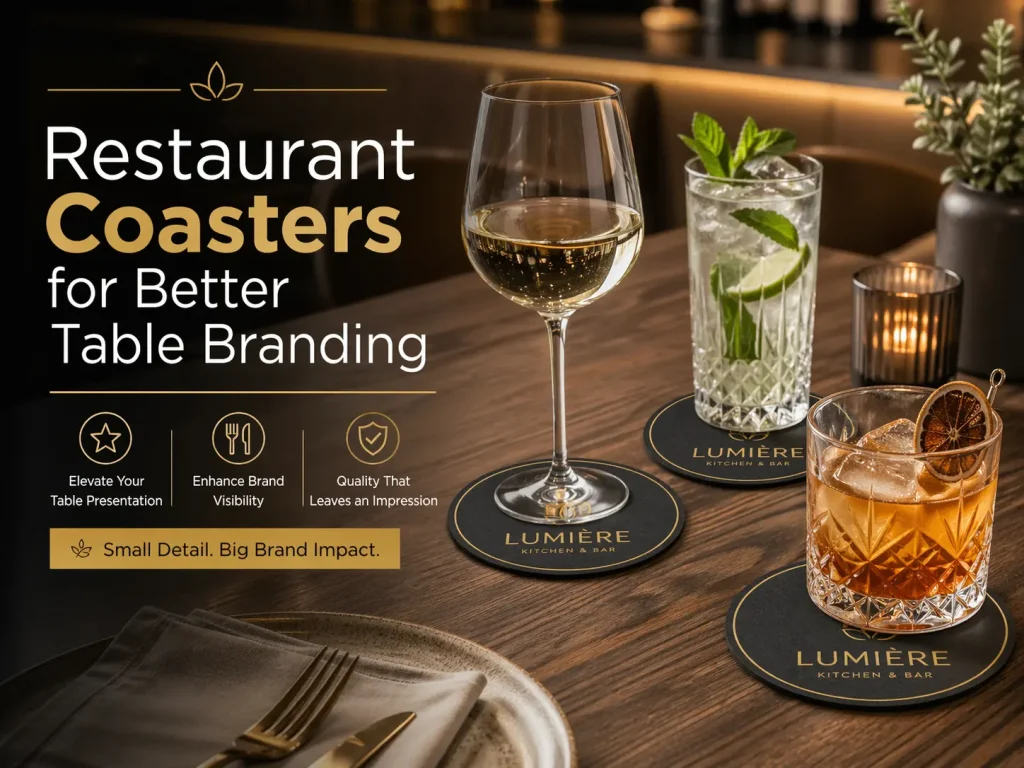
The restaurant industry functions through environments that experience both frequent customer contact and continuous customer movement. The dining areas maintain continuous service as they execute their process of table management which involves three stages of table operations. The restaurant provides customers with drinks that are delivered through the day yet the drinks create problems because they generate moisture which results in spills and their temperature creates damage to the underlying surface. The materials develop permanent damage because they endure continuous use which creates continuous physical contact. The cycle causes premium tabletops to lose their finish at an accelerated rate because it remains unaddressed.
The protection of tables operates as a maintenance task because it protects the property and establishes brand identity. The table protection system which serves as a maintenance function establishes brand identity for the business. The presence of water rings and swollen wooden edges and worn-out surfaces causes visitors to experience a decline in orderliness within the area. The system functions correctly but its ability to display premium quality has decreased. The restaurant sector loses its positive reputation when staff members display even minor signs of poor maintenance.
A coaster solves a basic but recurring problem. The system establishes a specific point of contact between the drink and the table surface. The system establishes a cleaner and more organized environment because it controls the setup during the busiest service times. The system enables staff members to maintain a more attractive dining space throughout their workday.
The value goes beyond protection. A coaster also supports table styling. The item establishes a frame around the glass which creates an organized dining setup to show where each drink should be placed. The visual control system in hospitality needs to create good presentations which help to establish trust with customers. Customers tend to associate neatly managed details with a better overall operation.
A Strong Branding Tool at Every Table
Strongest hospitality brands know that their brand identity needs to extend beyond their restaurant signs and menu items and packaged goods. It should appear naturally across the full guest journey. A coaster offers direct tabletop visibility without demanding extra space or distracting from service. The coaster serves as a branding surface because it does not require physical space to operate.
The restaurant can display its brand identity through its logo and brand colors and typography and tagline and visual motif on each table without making it look unnatural. The business uses an object with existing functional use instead of creating another promotional insert. The small printed material generates higher value through its improved return on investment. Restaurant coasters maintain their visibility to guests throughout the complete duration of their beverage service. The coaster remains visible to customers who order water coffee mocktails , cocktails, beer or soft drinks.
The process of repeated exposure leads to stronger memory recall. The system creates uniform visual branding which extends through multiple locations and dining areas and different service styles. Tabletop branding serves as a competitive advantage for restaurants which need to deliver unforgettable in-store experiences. The business demonstrates complete understanding of how to design customer environments through its establishment. A brand establishes itself through consistent branding which distinguishes it from common outlets.
Protecting Tables and Reducing Wear
The primary business argument for coasters shows that they protect furniture from damage. Restaurants need to spend substantial money on their tables especially when they create premium dining areas which use specific materials to match their design theme. Wood, laminate, veneer, marble, stone, glass, and polished composites all respond differently to moisture and heat but none of these materials should be handled with direct contact.
Cold beverages produce moisture which forms on surfaces. Hot drinks release thermal energy. The two processes create permanent impressions on surfaces. The cumulative effects of daily use from dozens to hundreds of covers causes operational problems. The cost of replacing or refinishing tables exceeds the expenses of direct damage protection measures.
Restaurant coasters provide surface protection which extends their duration of use. The system prevents water buildup while stopping ring formation and reducing table friction from glass movement. The system provides essential support for bars and rooftop spaces and high-traffic cafés and fast-service dining locations because of its constant drink activity.
The system brings a benefit for upkeep purposes. The dining space needs less extensive cleaning because cleaner surfaces create fewer problems which require deep restoration work. The system helps businesses control their expenses. The system maintains a fresh appearance in the space for extended periods.
Supporting Cleanliness and Better Presentation
The guests establish their first impressions because they observe table conditions which include sticky, wet, cluttered, and properly managed table settings. The coaster creates an improved dining experience because it holds liquid and shows the correct location for beverages.
The table design shows better visual impact which results from its straightforward construction. The coaster makes drink placement more deliberate than placing it on the tabletop. The item appears to be part of service delivery instead of being placed there as a random object. Restaurants find this to be useful in all their dining spaces which include both high-end and regular casual dining environments.
Dining establishments use coasters to create more positive views about their sanitary conditions. Customers subconsciously identify between two types of table management which includes proper table management and improper table management. The coaster functions as a resting spot for the glass which controls moisture movement from one area to another which includes plates, cutlery , phones receipts and condiments.
In the hospitality industry, the public’s perception of cleanliness functions as a main concern. The view establishes trustworthiness. Customers develop trust in the business when they see staff members who maintain special attention to small operational aspects. Customers who develop this perception will return for future visits while they will produce more positive recommendations through word-of-mouth.
A Smart Surface for Promotions and Engagement
Coasters at restaurants serve more than brand identity because they enable customer engagement and their promotional activities. The material becomes a valuable tool for telling messages after it stops functioning as a safety shield. Restaurants use coasters to advertise their happy hour times and special events and their chef specials and loyalty programs and QR links and social media platforms. The printed coaster offers customers a menu scan option and a review opportunity and a rewards program enrollment and a signature drink discovery. The coaster sits next to the drink which creates a direct link to the drinking time.
This method works best for businesses that want to advertise their products without creating visual disturbances through additional marketing materials. The coaster functions as a service equipment component which allows customers to experience the message in an organic way. Restaurant coasters which businesses use for strategic purposes create an environment that supports customer interaction while generating additional sales. The design-led restaurants benefit from this product while the commercially driven restaurants use it to increase their table conversion rates.
Choosing the Right Material and Format
The selection process for restaurants should involve multiple factors instead of relying solely on visual aspects. The team must evaluate five criteria which include absorbency, thickness, print quality, durability, and product suitability according to the drink types which they will serve.
Paperboard coasters serve as the standard choice which people use for brief advertising activities and special occasions and single-use purposes. The product offers affordable pricing and simple design options, but its value will determine its final worth. The low-grade stock material presents a fast deterioration rate which decreases presentation value. Pulpboard or absorbent board is often preferred where moisture control is important.
Premium dining establishments and lounges and private dining areas and high-end service venues use reusable cork and rubber-backed and acrylic and leatherette and wood and specialty composite formats. The materials provide different surface textures which display brand identity, but their maintenance requirements must match the design needs.
The restaurant coaster design should include elements which support actual coaster functionality. The dimensions should match the dimensions of drinkware while the shape and printing area should remain consistent. The coaster loses its purpose when its dimensions become too small. Its appearance becomes unattractive when the product lacks durability. The design will fail to establish brand identity when the elements become excessively dense.
Product selection requires executive leaders to evaluate three key areas which include operational requirements, visual designs, and existing service capabilities. The commercial sweet spot represents the optimal business point.
Design Principles That Improve Results
The process of designing an effective coaster requires designers to understand that they must remove elements instead of adding them. The design process needs to create visible elements which establish clear communication. The logo should be readable. The restaurant needs to use visual elements which create its unique identity. The layout needs to create an organized appearance which prevents excessive clutter. A coaster needs disciplined design because it functions as a small surface area.
The message needs to stay on one main point of focus. The material requires only one brand mark together with one supporting line or one main call to action. The use of strong typography together with clean spacing and high contrast produces better visibility results. Designers must ensure proper QR code dimensions and optimal placement which maintains design balance with other elements.
Restaurants need to establish a standard approach which they should follow. The tabletop assets must match the design elements which include menus packaging wall graphics and uniforms and social media content. The shared visual presentation system creates a unified brand image which helps customers identify the brand while delivering a more sophisticated brand experience.
A strong coaster design does not try to say everything. The design establishes brand identity while it supports table settings and builds trust with customers.
Impact on Guest Experience and Brand Memory
The hospitality industry uses customer experience development through incremental progress. Guests remember the food but they also remember the table ambience and the service visual elements and the design of the dining space. The small details which restaurants operate their businesses with present greater impact to customers than most operators understand.
Restaurant coasters function as brand memory tools because they create customer touchpoints throughout the dining experience. Customers touch and see and use these items during their time at the establishment. The items appear in both the photos customers take and the conversations they have and the moments of service they experience. Properly designed elements create a dining atmosphere which customers perceive as complete and purposeful.
The situation brings benefits for strategic planning. A better guest experience supports better reviews which lead to stronger customer memory and increased customer return rates. The situation holds significant importance in markets where businesses compete against each other. Restaurants now face competition which extends beyond their food offerings. The competition now includes restaurant atmosphere and service consistency and brand experience throughout the entire customer journey.
Common Mistakes Restaurants Should Avoid
The biggest error occurs when people regard coasters as secondary elements to their work. The cheap printing and weak materials together with the cluttered artwork and inconsistent branding will create negative effects which better companies should avoid. The coaster design needs to handle curls and stains and tearing while avoiding generic appearance to maintain table visual standards.
Another mistake is overloading it with information. A coaster does not function as a brochure. The excessive text and multiple promotional offers together with the numerous visual components create both functional and reading difficulties. The best solution requires simplicity.
Restaurants should also avoid using the wrong format for the service style. The premium cocktail lounge and the fast-paced quick-service restaurant both use coasters but their materials and finishes and design logic differ. The product needs to match the way business operates.
Conclusion
The coaster serves as a minor asset to restaurants because its small size creates significant operational effects. The items accomplish multiple functions because they protect valuable tables while enhancing drink service appearance and maintaining cleanliness standards and providing businesses with branding opportunities. The elements create a dining space that feels more intentional to visitors.
When restaurant coasters require selection through proper design then the coasters will provide functional benefits and brand advantages to the establishment. The products create protection for surfaces which improves how tables look while providing the business an extra way to influence how customers view their brand. Restaurants should implement this strategy because it enables them to manage customer experiences and business operations more effectively.
Coasters function as essential components for restaurants which want to improve their table layout and safeguard their furniture assets and display their brand image. The elements function as essential components which strengthen the complete system of hospitality.
FAQ
1. Why are restaurant coasters important for dining spaces?
They protect tabletops from moisture and heat, improve presentation, and support a cleaner, more professional guest experience.
2. What material is best for drink coasters in restaurants?
It depends on the use case. Absorbent board works well for disposable formats, while cork, rubber-backed, wood, or premium reusable materials suit upscale settings.
3. Can coasters help with restaurant branding?
Yes. They provide a visible tabletop branding surface for logos, campaigns, QR codes, and promotional messaging without adding clutter.
4. Are coasters useful only for bars and cafés?
No. They work across casual dining, fine dining, lounges, hotel restaurants, and even quick-service spaces where beverages are regularly served.
5. How often should restaurants replace coasters?
Disposable coasters should be refreshed as needed based on usage. Reusable coasters should be replaced when they show wear, fading, damage, or loss of hygiene quality.