
In a world where most business interactions begin online, printed brand materials still hold a strong position. A well-designed business card is not just a contact detail carrier. It is a compact brand introduction, a networking tool, and a physical reminder of your business. That is why custom business cards continue to matter for companies, freelancers, hospitality brands, event businesses, real estate professionals, designers, consultants, and service providers.
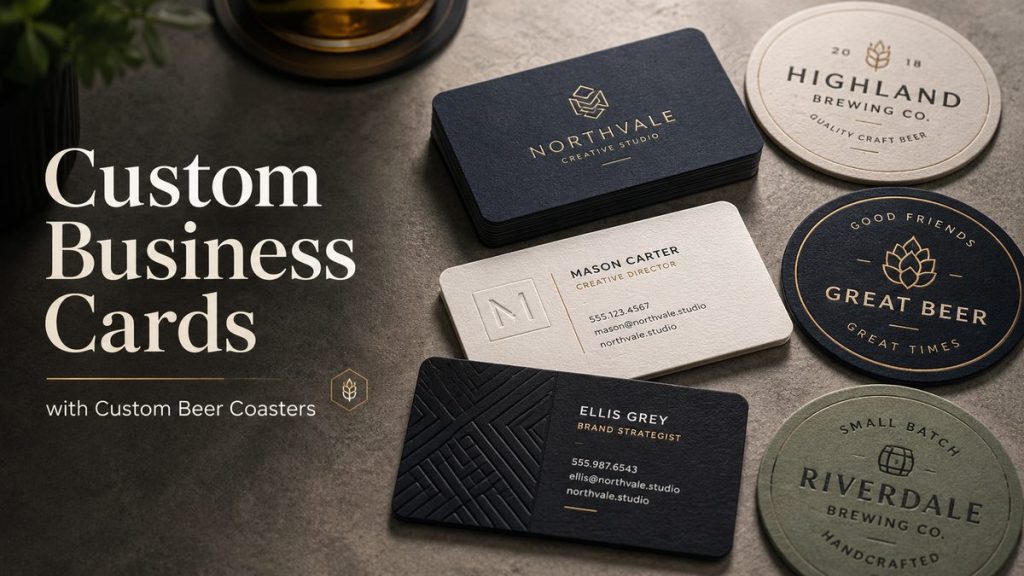
A business card is often handed over during a short conversation, a meeting, a trade show, a product launch, or a client visit. In that moment, it becomes the first physical extension of your brand. If it looks cheap, cluttered, or forgettable, the brand experience weakens. If it feels intentional, clear, and premium, it strengthens trust immediately.
Along with business cards, other branded print products such as custom beer coasters also play a valuable role in brand visibility, especially for hospitality, beverage, event, and promotional businesses. Together, these small-format print products help brands stay visible in real-world spaces where conversations actually happen.
Why Custom Business Cards Still Matter
Business cards have survived the digital shift because they offer something digital contact sharing cannot fully replace: touch, presence, and memory.
When someone receives a business card, they are not only reading your name and number. They are experiencing your brand’s colours, layout, paper quality, finish, typography, and attention to detail. This small printed piece says a lot about how seriously your business presents itself.
They Make Networking Easier
At events, meetings, exhibitions, and business gatherings, people meet several contacts in a short time. Sharing a phone number verbally or asking someone to search for your profile can feel slow and forgettable. A custom business card makes the exchange quick and professional.
It also gives the other person something they can keep, photograph, save, or pass on to someone else.
They Help People Remember You
A basic card with only a name and number may not stand out. But custom business cards designed with brand colours, a strong logo, clear spacing, and a clean layout create better recall.
The goal is not to overload the card with information. The goal is to make it easy for someone to remember who you are, what you do, and how to contact you.
They Build Trust
A professionally printed card signals that your business is established and serious. This matters especially for service-based businesses where trust plays a major role before a client makes a decision.
If the card feels refined, the brand feels refined. If the card feels rushed, the brand may also feel rushed.
What Makes a Business Card Truly Custom?
Custom does not only mean adding your logo to a template. A truly custom business card is designed around your brand identity, business category, audience, and purpose.
For example, a luxury interior designer’s card should not look like a local repair service card. A craft beer brand’s card should not look like a corporate law firm’s card. Each business has its own personality, and the card should reflect that.
Brand Colours
Your business card should use colours that match your brand identity. These colours help create consistency across your website, packaging, social media, signage, brochures, and other printed materials.
If your brand is minimal and premium, neutral tones may work better. If your brand is bold and youthful, stronger colours may create a sharper presence.
Typography
Fonts play a major role in how your card feels. A clean modern font can make the brand feel professional and current. A serif font can feel classic and premium. A bold display font can feel energetic and creative.
The important part is readability. A beautiful font is useless if people cannot easily read your name, phone number, or email address.
Layout and Spacing
Good business card design is not about filling every inch. It is about giving every detail enough breathing space.
Your logo, name, designation, phone number, email, website, social handle, and address should be arranged clearly. A cluttered card makes people work harder to find information, and that weakens the experience.
Paper Stock
Paper quality directly affects the perception of your brand. Thin paper can feel weak. Thicker card stock feels more premium and durable.
The choice of paper depends on your brand style. Some businesses prefer smooth matte cards. Others may choose textured stock, recycled paper, glossy finishes, or soft-touch surfaces.
Finish and Detailing
Finishing options can make custom business cards feel more memorable. Options may include matte finish, gloss finish, embossing, debossing, foil stamping, spot UV, rounded corners, painted edges, or textured paper.
The finish should support the brand, not overpower it. Premium does not always mean flashy. Sometimes the most effective card is simple, clean, and beautifully finished.
Key Information to Include on Custom Business Cards
A business card has limited space, so every detail must earn its place.
Essential Details
At minimum, your card should include:
Name
Business name
Logo
Designation or service category
Phone number
Email address
Website
Social media handle, if relevant
For location-based businesses, adding an address can be useful. For digital-first businesses, a QR code can help people reach your portfolio, menu, booking page, or contact form.
What to Avoid
Avoid adding too many services, too many icons, too many phone numbers, or long paragraphs. A business card is not a brochure. Its job is to introduce and direct, not explain everything.
Too much information makes the card look cramped and unprofessional.
Business Card Design Ideas by Industry
Different industries need different design approaches. A card should not only look good but also match the expectations of the audience.
Interior Designers and Architects
For interior designers and architects, custom business cards should feel refined, structured, and design-led. Clean spacing, premium paper, muted colours, and strong typography work well.
A subtle texture, embossed logo, or minimal line detail can add sophistication without making the card too loud.
Restaurants, Cafes, and Bars
Hospitality brands can be more playful and experience-driven. Cards for restaurants, cafes, breweries, or bars can use richer colours, bold typography, illustrations, or QR codes leading to menus and reservations.
For these brands, custom business cards can also be paired with custom beer coasters to create a stronger table-side brand experience.
Real Estate and Property Businesses
Real estate business cards should build trust quickly. Clean layouts, premium finishes, strong contact visibility, and professional branding are important.
The design should feel credible and stable, not overly experimental.
Consultants and Corporate Professionals
For consultants, coaches, financial advisors, lawyers, and corporate professionals, the card should be sharp, simple, and easy to read.
Neutral colours, clear hierarchy, and strong paper quality usually work better than trendy designs.
Creative Businesses
Photographers, artists, stylists, agencies, and designers can take more creative risks. Unusual layouts, bold colours, custom shapes, or unique finishes can help the card become a mini portfolio piece.
However, creativity should not reduce clarity. The card still needs to function properly.
How Custom Business Cards Support Branding
Branding is not built only through logos and websites. It is built through repeated experiences. Every time someone sees your business card, packaging, signage, social media, or printed material, they form an impression.
Custom business cards support branding by creating consistency.
They Keep Your Identity Consistent
When your business card matches your other brand materials, your business looks more organised and professional. This consistency helps people recognise your brand faster.
For example, if your website uses deep green, cream, and gold, your business card should not suddenly use red and blue unless there is a strategic reason.
They Make the Brand Tangible
Many brands exist mostly online. A business card brings the brand into the physical world. The texture, thickness, and finish of the card make the brand feel more real.
This is especially valuable for businesses that rely on personal meetings, referrals, events, or local networking.
They Improve Word-of-Mouth Referrals
A business card is easy to pass along. If someone wants to recommend your service, they can hand over your card instead of searching for your contact details.
This makes referrals smoother and more practical.
Custom Business Cards and Custom Beer Coasters: A Strong Branding Combination
While custom business cards are used for direct networking, custom beer coasters are powerful for brand visibility in social and hospitality settings.
Both products are small, affordable, easy to distribute, and highly practical. But they work in different ways.
Business Cards Create Direct Contact
Business cards are personal. They are handed from one person to another. They support meetings, introductions, sales conversations, and professional follow-ups.
Their main job is to help someone contact you after the interaction.
Beer Coasters Create Repeated Visibility
Custom beer coasters work differently. They sit on tables, bars, counters, event setups, tasting rooms, breweries, cafes, and hospitality venues. People see them while they are relaxed, socialising, eating, or drinking.
This makes them useful for brand recall. A coaster with your logo, tagline, offer, QR code, or campaign message can stay in front of customers for a longer time than a standard flyer.
Together, They Complete the Experience
For hospitality brands, breweries, beverage companies, restaurants, event agencies, and promotional campaigns, using both custom business cards and custom beer coasters can create a stronger brand ecosystem.
The business card helps with direct networking. The coaster helps with repeated brand exposure. One supports contact. The other supports visibility.
How to Design Custom Beer Coasters for Brand Promotion
Custom beer coasters should be designed with the same care as business cards. They are not just table accessories. They are small advertising spaces.
Keep the Message Simple
A coaster does not need too much text. A logo, short tagline, QR code, social handle, or promotional line is usually enough.
For example, a brewery may use a coaster to promote a new beer. A restaurant may use it to highlight happy hours. An event company may use it for sponsor visibility.
Use Strong Visual Contrast
Coasters are placed under glasses, handled by customers, and viewed from different angles. The design should be easy to notice and read.
Strong contrast helps the branding stay visible even in busy hospitality environments.
Choose Durable Materials
Custom beer coasters should be practical. They need to handle moisture, glass marks, and repeated use depending on the material. Paperboard coasters are great for events and promotions, while rubber-backed or premium coasters can be used for longer-term branding.
Add a QR Code Strategically
A QR code can turn a simple coaster into an interactive marketing tool. It can lead customers to a menu, offer page, social media profile, review page, booking link, or product page.
The QR code should not dominate the design. It should be placed neatly with a small instruction such as “Scan for menu” or “Scan for offers.”
Common Mistakes to Avoid in Custom Business Cards
Even a small design mistake can make a business card less effective.
Using Too Many Fonts
Using three or four fonts on one small card makes the design look messy. Stick to one or two fonts that match your brand.
Making Text Too Small
Small text may look neat on screen but become hard to read after printing. Always check print size before finalising the design.
Ignoring Paper Quality
A good design printed on poor paper loses impact. Paper stock matters because people physically hold the card.
Overcrowding the Design
Trying to include every service, every social media icon, multiple addresses, and long taglines will make the card look cluttered. Keep it focused.
Not Checking Contact Details
This sounds basic, but it is one of the most common errors. Always proofread phone numbers, email addresses, website URLs, and QR codes before printing.
How to Make Custom Business Cards More Memorable
A memorable card does not need to be complicated. It needs to feel intentional.
Use a Strong Front and Back
Use one side for your logo or brand statement and the other side for contact information. This gives the card a clean structure and makes it feel more premium.
Add a Clear Call-to-Action
A business card can include a simple call-to-action such as:
Visit our portfolio
Scan to book a consultation
View our menu
Follow us online
Request a quote
This gives the receiver a next step.
Match the Card to the Customer Experience
Think about where and how the card will be used. A luxury designer may need a premium textured card. A brewery may need a bold, playful card. A corporate consultant may need a minimal and polished card.
The design should match the situation in which the card is handed over.
Why Print Quality Matters
The final result depends heavily on print quality. Even the best design can fail if colours print incorrectly, edges are rough, paper feels weak, or finishes are poorly applied.
Professional printing ensures better colour accuracy, cleaner cuts, stronger material options, and a more polished final product.
For custom business cards, print quality affects trust. For custom beer coasters, it affects both appearance and usability. Poorly printed coasters can fade, absorb too much moisture, or look cheap on the table.
Conclusion
Custom business cards remain one of the most practical and effective branding tools for real-world networking. They help businesses create a strong first impression, share contact details professionally, and stay remembered after a meeting or event.
When designed properly, a business card becomes more than a small printed card. It becomes a clear, physical expression of your brand.
For businesses in hospitality, events, beverages, restaurants, and promotions, pairing business cards with custom beer coasters can take brand visibility even further. Business cards help people connect with you directly, while coasters keep your brand present in social and customer-facing spaces.
Small print products may look simple, but when designed with clarity, quality, and purpose, they can create lasting brand value.