
Introduction
Custom coasters provide businesses with an easy method to create branded customer experiences through their use of custom coasters. The table functions as more than a beverage storage area in cafés, restaurants, bars, hotels, offices, and corporate gifts during events. The space serves as a center for social interaction while customers place their orders and take pictures and advertising content delivers its effects through multiple showings.
Most businesses invest in signage, packaging, menus, social media, and paid ads. The elements possess significance yet they fail to reach the area which customers encounter at their most immediate point. A drink coaster sits exactly where the customer’s hand and eyes naturally go. The brand obtains another chance to become visible through every instance when a glass gets placed or lifted or moved or photographed or shared across the table.
The function of drink coasters extends beyond their role as table accessories. The products offer surface protection while they enhance visual appeal and enable businesses to advertise their brand through recurring customer interactions. For hospitality brands especially, small print details can influence how premium, organised, and memorable the guest experience feels.
Why Drink Coasters Still Matter
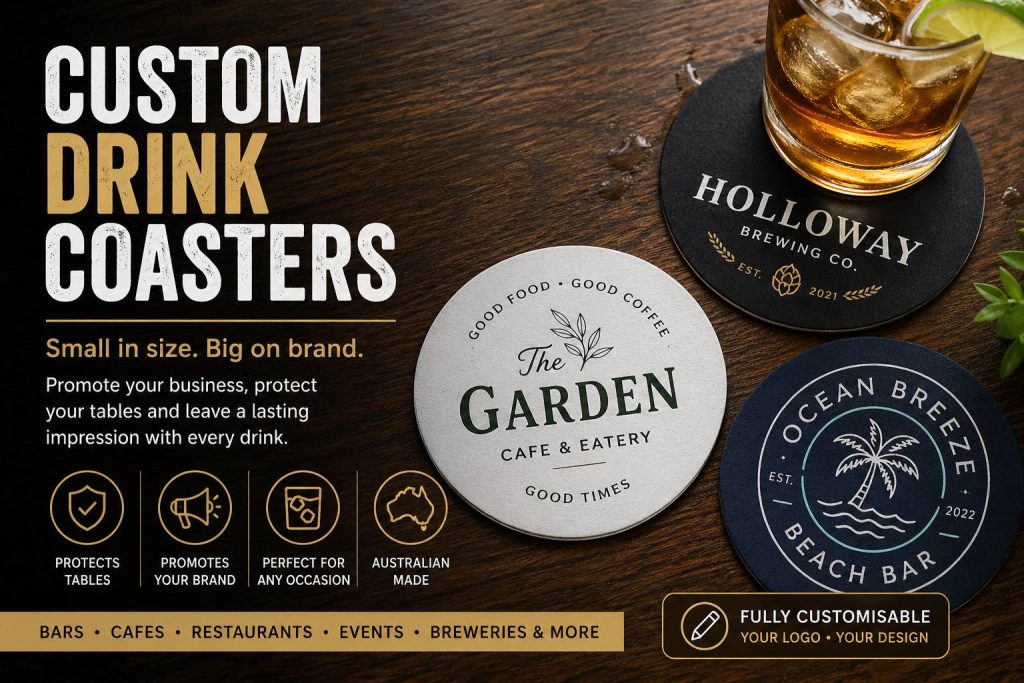
The first function of a coaster exists to address a practical need. The product safeguards furniture against water stains and heat damage and scratches and humidity destruction. The protection system establishes operational value which extends throughout all daily activities in spaces that experience high volume foot traffic in cafés and bars and restaurants and hotel lounges and event venues and meeting rooms.
The business value extends beyond the capacity to protect tables. Coasters enhance product display. A drink served on a well-printed coaster feels more complete than a drink placed directly on a plain surface. Customers perceive the design detail which appears minor because they observe the entire brand experience.
The process of creating hospitality design requires multiple design elements to work together. The menu and glassware and lighting and seating and music and service style and table setup and printed materials all work together. A plain table can feel unfinished. A table with branded coasters feels more intentional.
The custom coasters function as useful tools which enhance both customer experience and marketing efforts. The items do not function as noisy promotional materials. The system functions through its silent operations. The items display brand visibility because they blend into the customer’s space during their entire time at the establishment.
A Smart Branding Tool for Hospitality Businesses
Restaurants and bars need to establish their unique ambiance which serves as their primary competitive advantage against their competitors who serve food and drinks. Customers remember how a place made them feel through the table appearance and the service experience which showed them whether the establishment provided a valuable experience. Drink coasters help support that perception by adding a consistent branded layer to the table.
Cafés use coasters to display warm brand messages which promote seasonal drinks and include QR codes and social media links. Bars use them to showcase their special cocktails and drinking specials and their quiz nights and live music events and they special drinking partnerships. Hotels use them to enhance the appearance of their room service and lounge service and conference table service.
The advantage is simple: customers interact with coasters naturally. People can browse coasters without needing to read brochures or watch banners. The coaster is already in their hand, under their glass, or in the frame of their table photo.
Branded coasters hold high value because people use them in spaces where they spend their time. A digital ad may disappear in seconds. A coaster can remain visible for the full duration of a meal, meeting, tasting session, or event.
How Coasters Support Brand Recall
Brand recall builds through repeated exposure to the brand by customers who see it in appropriate situations. Coasters provide natural product exposure through their function as drinkware supports. Four people are seated at a dining table in a restaurant. The four customers each select their preferred beverages.
All drinks rest on coasters which serve as their bases. The customer maintains visibility of the logo and campaign line and offers and QR code throughout their stay. The brand impression occurs again when new drinks are served. The coaster will become visible when someone takes a photo which includes it in the shot.
Custom coasters function effectively for local businesses and hospitality locations and events and experience-based companies. The installation enhances the venue’s identity while maintaining its existing table arrangement.
The message does not need to be complicated. Coaster text should only include brief statements because it needs to communicate information quickly. The basic design needs only a logo or brand line or QR code or product name or basic instruction. The main purpose of the document. A coaster has limited space, so it should not be treated like a brochure.
Using Coasters for Promotions
The most effective application of printed coasters serves as a marketing tool. The coasters which customers use as their personal space provide the perfect way to display special offers and product launches and special events and holiday promotions. The restaurant uses the coasters to advertise its upcoming menu. The bar uses the coasters to display its monthly cocktail selection. The café uses the coasters to display a QR code which customers can use to register for loyalty programs. The hotel uses its promotional materials to advertise brunch services and spa appointments and internal activities. An event organiser can print sponsor logos, hashtags, schedules, table numbers, or interactive prompts.
Coasters provide a more effective advertising method than posters because they remain visible to customers who enter the personal space of their customers. The items provide better physical contact and more direct contact than other options. The coaster design requires a clean appearance and an easy-to-understand call-to-action for users to achieve actual engagement.
Short coaster lines can include:
“Scan for today’s specials”
“Tag us in your table moment”
“Try our signature cold brew”
“Ask for the chef’s tasting menu”
“Book your next private event”
Choosing the Right Coaster Material
The choice of materials determines the appearance and tactile qualities and operational capacity and lifespan of the coaster. The finish requirements for a premium cocktail bar must differ from those needed by a casual café. A corporate gift may need a different material from a one-day event.
Paperboard coasters serve as a standard option for bars and events and promotional campaigns. The products are lightweight and affordable while offering bulk printing capabilities. Cork coasters provide a warm and natural touch which makes them ideal for cafés and lifestyle brands and gifting purposes. Rubber or absorbent coasters provide practical solutions for high-use areas because they withstand multiple instances of drink placement.
Acrylic, ceramic, wooden, or stone-style coasters feel more premium. The items are appropriate for hotel suites and corporate gifts and luxury hospitality and real estate hampers and extended use at workplaces or homes.
The right choice depends on the goal. The material should be practical and affordable when the goal is to achieve visibility through mass production. The use of heavier and more durable materials for premium gifting purposes will increase the perception of value.
Design Tips for Better Results
Good coaster design is not about filling every inch of space. The design needs to create clear readability and brand recognition which establishes visual links to the brand identity.
Start with the main identity element. The logo or brand pattern or campaign graphic or product name or headline serve as identity elements. The design needs to show elements through visible space without creating overcrowded space. The second step requires selecting colours which match the brand personality. A luxury lounge requires deep colour tones which use limited typography, while a café needs friendly illustrations with warm colour designs.
The copy needs to remain brief. A coaster is not a flyer. The excessive text content creates a cluttered appearance which decreases visual impact. The presentation requires one primary message which needs a secondary element. The presentation uses a logo with QR code, a headline with offer, or a brand line with social handle.
The design requires strong contrast elements. The design fails to meet actual table requirements if the text fails to show clearly against its background. Customers should understand the message at a glance.
The design serves both actual use and its intended purpose. The coaster design will be partially hidden by a glass. The visibility of elements will be affected by condensation. Restaurants use both warm and dim lighting. The design should function properly in real-world situations which require more than digital mockup testing.
Where Businesses Can Use Drink Coasters
Drink coasters are not limited to bars and restaurants. They can be used across several business categories where table presence, gifting, or customer engagement matters. Cafés use them to create loyalty programs and to promote their seasonal beverages and social media campaigns. Bars use them to advertise their drinks and to host trivia nights and live musical performances and to create joint ventures with brands.
Hotels can place them in rooms, lounges, minibars, meeting spaces, and banquet areas. Breweries use them as their collectible merchandise. Corporate offices can use them in meeting rooms, pantry spaces, reception areas, and client gifting kits. Events can also use them strategically. At weddings, exhibitions, product launches, networking events, and corporate parties, coasters can carry event branding, sponsor visibility, QR codes, table details, or interactive questions.
Custom coasters provide companies with a flexible marketing solution through custom printing services. The product remains economically viable because its small size enables cost efficiency and its practical design ensures table presence and its design makes it easy to share information.
Why QR Codes Work Well on Coasters
QR codes have become common for menus, payments, registrations, feedback forms, reviews, and digital campaigns. A coaster serves as an ideal location to place the items because it remains within the customer’s reach throughout their time at the establishment. A café can connect customers to a loyalty program. A restaurant can link to a digital menu. A hotel can direct guests to room service or spa bookings. An event can link people to schedules, feedback forms, or social pages.
The function of a QR code requires contextual information for understanding. A plain code without a reason to scan becomes a weak security measure. Add a short instruction such as “Scan for the full menu,” “Scan to review us,” or “Scan to unlock the offer.” This gives the customer a clear reason to act.
Coasters as Part of a Print Kit
The strength of coasters increases when they are used together with a unified printing system. The system for hospitality businesses includes printing materials such as menus and tent cards and table talkers and bar runners and stickers and packaging labels and business cards and vouchers and takeaway inserts.
The brand achieves its complete identity when all visual elements maintain a unified design system. Customers may not consciously analyse every printed item but they can sense when everything belongs together. People develop trust through that pattern of behavior.
A café launch of its new beverage requires the creation of a full print advertising campaign. The coaster introduces the drink. The table tent explains the flavour. The menu insert shows the price. The sticker appears on takeaway packaging. The QR code directs customers to social media platforms and loyalty program registration.
Mistakes to Avoid Before Printing
The first mistake occurs because people attempt to communicate more information than they should. A coaster has limited space. The design will lose its message because it contains four design elements which include long paragraphs and multiple offers and too many icons and a small logo.
The second mistake is choosing the wrong material. A thin coaster may not suit a premium lounge. A heavy coaster may not make sense for a one-day event. The material should match the use case.
The third mistake is poor contrast. Light text on a busy background may look stylish on screen but fail on a table. People must prioritize readability because it matters more than decoration.
The fourth mistake is ignoring shape and size. Round, square, and custom-cut coasters create different impressions. The shape should support the brand identity and the way the coaster will be used.
The fifth mistake is printing without checking margins. Important text or logos placed too close to the edge may get cut or look unbalanced. You must maintain a secure area.
How to Plan a Coaster Campaign
The main goal of your custom coaster project needs to be established before you begin your ordering process. The purpose of this project should focus on either brand visibility table presentation or promotion which includes gifting and event engagement activities that use QR codes. The design will maintain its focus through one established objective which needs to be defined.
Next the audience needs to be identified. Different visual elements and messages will create different reactions from fine-dining guests corporate clients student café customers and wedding guests. The coaster should feel relevant to the people using it.
The team needs to determine the product lifespan. Short-term campaigns can use lighter materials and campaign-specific graphics. Long-term brand usage requires both durable materials and a design which remains relevant throughout time.
The team needs to create a placement plan. Will the coasters be used on every table, only at the bar, inside gift boxes, in meeting rooms, or at an event counter? The placement of the objects will determine how people will interact with those objects.
Conclusion
Custom coasters may be small, but they deliver practical and strategic value. The coasters protect surfaces while they enhance table presentation and they support promotional activities and their QR codes help customers remember the brand better and they create consistent experiences for customers.
Drink coasters provide ongoing exposure for cafés bars restaurants hotels events offices and gifting campaigns because these locations attract customers who pay attention to their surroundings. The experience does not face interruption from them. The two elements join together to form a unified experience.
Successful outcomes require specific development of plans through their entire process. The proper material selection must occur together with maintaining design readability and developing one central message and executing print testing and establishing coaster connections to broader brand goals and campaign objectives.
A well-designed coaster is not just something placed under a glass. It serves as a portable branding tool that enables customers to experience every table setting and drink and customer interaction with greater purpose.
FAQ
1. What are custom coasters used for?
They are used to protect surfaces, improve table presentation, promote a brand, share offers, display QR codes, and create a more complete customer experience.
2. Are drink coasters useful for restaurants?
Yes. Restaurants can use drink coasters to keep tables clean, promote specials, improve presentation, and repeat brand visibility during the customer’s visit.
3. Can coasters help with marketing?
Yes. Coasters work like small table-level marketing tools. They can carry logos, offers, QR codes, event details, or social media prompts.
4. What material is best for coasters?
The best material depends on the use. Paperboard is good for bulk promotions, cork feels natural, rubber works well for high-use spaces, and ceramic or wooden options feel more premium.
5. Should I add a QR code to a coaster?
Yes, if there is a clear reason to scan it. Use QR codes for menus, reviews, offers, loyalty programs, bookings, or event information.