
Introdcution :
Every day, hospitality businesses across the globe face a common Problem: how to make their brand memorable in a world overflowing with advertising noise. Restaurants, bars, cafés, breweries, and lounges are constantly seeking ways to connect with customers without resorting to intrusive ads or overly expensive campaigns. Traditional marketing methods like billboards and digital ads have their place, but they often fall short in creating a personal connection with patrons. That’s where a humble yet powerful tool steps in custom drink coasters. These everyday items sit quietly at the center of tables, subtly reinforcing brand identity with every sip.
Imagine a guest entering a cozy bar. They take a seat, order a drink, and before long, their eyes land on the coaster beneath their glass. The visual contact may last only seconds, but the subconscious impact lingers. This simple interaction, effortless and unobtrusive, solves a big marketing problem: building brand recall without disrupting the guest experience. For businesses looking to enhance visibility and deepen engagement, incorporating branded coasters into hospitality spaces is not just smart—it’s strategic.
In this comprehensive blog, we explore how promotional drink coasters have evolved into invaluable tools for brand promotion, why they work so well, and how to use them most effectively. By the end, you’ll understand how these seemingly simple items play a critical role in modern beverage marketing and hospitality branding.
What Makes Custom Drink Coasters Effective Advertising Tools
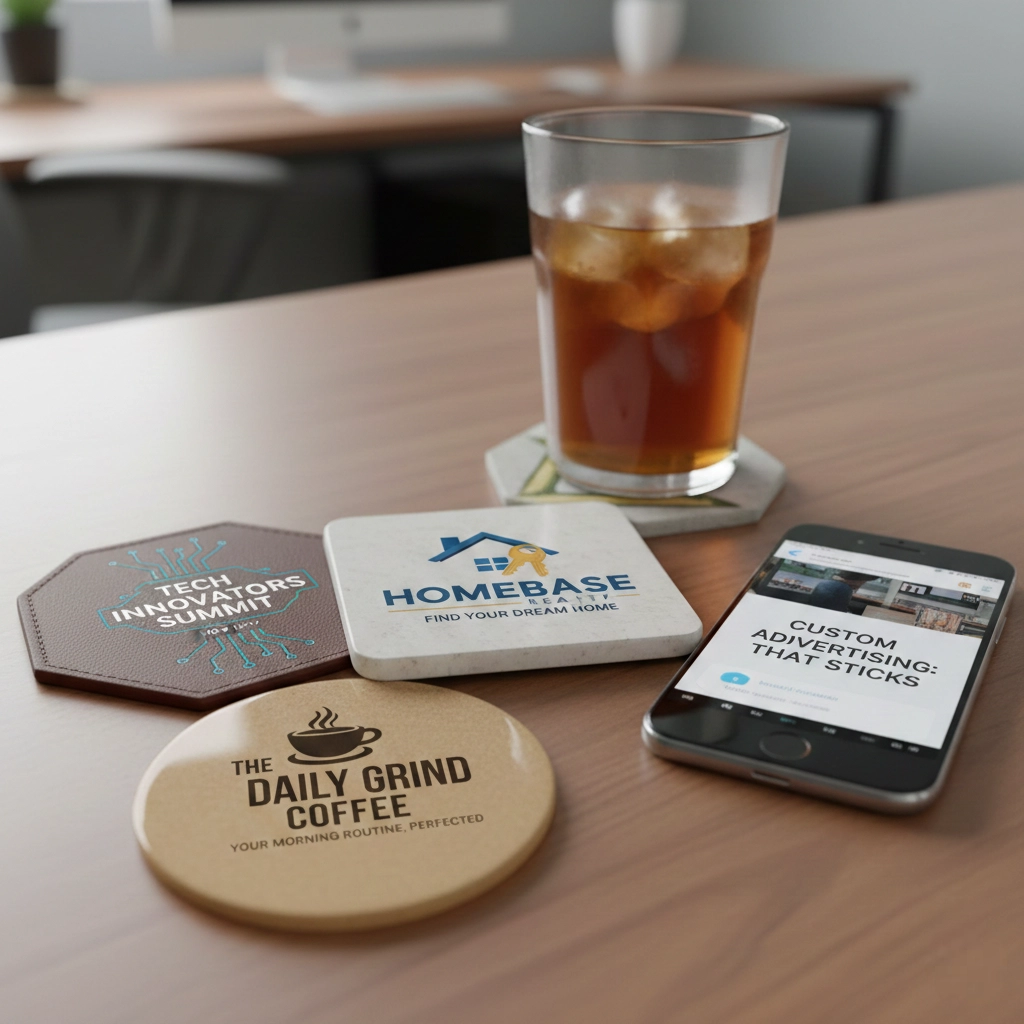
At first glance, coasters might seem like insignificant accessories—functional surfaces meant to protect tables from condensation. However, well-designed custom drink coasters double as miniature brand ambassadors. They offer constant visibility without competing for attention like a flashing digital sign. Unlike one-time interactions such as a social media ad or a TV spot, coasters enjoy repeated exposure. Each time a customer picks up their drink or glances at the table, the branding on the coaster reinforces memory and builds recognition over time.
Their strength lies in subtlety. Guests don’t feel advertised to instead, they absorb brand cues naturally as part of the environment. This creates a warm, organic form of customer engagement that resonates more deeply than overt messaging. In environments where patrons linger, such as lounges and pubs, the exposure from coasters can be considerable. Over time, customers begin to associate positive experiences—good company, enjoyable drinks, delightful ambiance—with the brand cues they encounter on the table.
How Coasters Enhance Brand Visibility in the Hospitality Industry
In the competitive world of hospitality, visibility is everything. A brand can have exceptional service and unforgettable flavors, but without consistent exposure, that greatness can go unnoticed. Branded coasters offer a low-key yet powerful method to keep your identity in front of customers. Because they sit right beneath the glass, these coasters are among the first things guests see when seated and the last things they engage with at checkout. This dual exposure creates layered impressions that strengthen recall.
Coasters also travel beyond the initial point of sale. Some guests may take them home, slip them into pockets, or pin them to corkboards—turning your investment into ongoing passive promotion. This organic distribution extends your reach far beyond what traditional table signage can achieve.
The Psychology Behind Branded Coasters and Customer Engagement
Human psychology plays a significant role in why coasters work. Visual marketing relies on repetition, familiarity, and positive association—all elements satisfied by custom drink coasters. Our brains are wired to recognize and remember patterns. When customers interact with coasters repeatedly, their minds store subtle cues related to your brand. This phenomenon, known as the mere exposure effect, suggests that people tend to develop preferences for things they see often—even if they don’t consciously register them every time.
Moreover, coasters are tactile objects. Unlike a poster on a wall, coasters are touched, moved, and physically engaged with throughout a visit. This tactile contact strengthens memory encoding, anchoring the brand message deeper in the customer’s mind. The next time this customer considers where to go for drinks or a meal, that mental anchor may be the nudge that influences their choice.
Visual marketing thrives on subtlety, and this is where coasters excel. They incorporate brand colors, logos, taglines, and even QR codes without overwhelming the guest. The result is messaging that feels part of the experience rather than an interruption.
Designing Your Coasters for Maximum Impact
Design is at the heart of an effective coaster campaign. A poorly designed coaster may serve its protective function but fail to communicate anything meaningful about your brand. To be effective, coasters must combine aesthetic appeal with clarity of message. Choosing the right colors is vital—harmonizing with your brand palette while maintaining contrast for easy readability. High-quality graphics and crisp logo placement signal professionalism, while thoughtful typography ensures that text is legible even at a glance.
For example, incorporating a simple but memorable tagline can reinforce brand identity and encourage engagement. Some businesses leverage interactive elements like countdowns to upcoming events or gentle prompts to scan a QR code for exclusive offers—blending event branding and digital engagement seamlessly.
A well-designed coaster doesn’t compete with the surroundings; it complements them. By placing visual emphasis on key brand elements without clutter, these items become elegant ambassadors of your identity.
Material Choices and Their Influence on Brand Perception
Not all coasters are created equal, and material choice significantly influences perception. Traditional cardboard coasters are inexpensive and versatile, making them suitable for high-turnover environments where frequent updates are needed. However, for brands seeking longevity and a premium feel, materials like cork, wood, or even metal offer texture and heft that communicate quality.
Cork coasters have a natural, earthy feel—ideal for brands that emphasize sustainability or artisanal roots. Wooden coasters evoke warmth and tradition, fitting perfectly in upscale lounges or boutique cafés. Metal or ceramic coasters, on the other hand, radiate sophistication and durability, aligning well with premium or luxury establishments.
Each material sends a different message, and understanding these subtle cues allows your brand to reinforce the right characteristics. Selecting the appropriate material ensures that your coaster does more than sit under a drink—it becomes part of the experience.
Sustainability in Coaster Production
In today’s environmentally conscious world, sustainability has moved from trend to expectation. Customers increasingly value brands that demonstrate eco-friendly practices. Choosing sustainable coasters made from recycled or biodegradable materials aligns your brand with these values, signaling commitment to responsible hospitality.
Eco-friendly options, such as bamboo or recycled paperboard, are not only kinder to the planet but also provide story-rich talking points that can enhance customer connection. When guests recognize that your brand has made thoughtful material choices, it fosters respect and loyalty. Integrating sustainability into coaster production isn’t just good practice—it’s smart branding in an era where environmental stewardship resonates deeply with consumers.
Cost-Effectiveness of Branded Drink Coasters
One of the most compelling advantages of coaster-based promotion is its cost-effectiveness. Compared to traditional advertising methods like print ads, outdoor billboards, or digital campaigns, coasters offer a high return on investment with relatively minimal expenditure. The production costs are low, yet the exposure and engagement they generate can be significant.
Because coasters are used repeatedly throughout a customer’s visit, their value multiplies with each interaction. Instead of paying for one-time impressions, you receive continuous visibility throughout a guest’s stay. For small businesses, this means stretching marketing budgets further without compromising impact.
Moreover, coasters integrate seamlessly into daily operations. Unlike staff-driven promotions that require training and time, coasters work autonomously. Once placed, they perform consistently, quietly reinforcing your brand with every glass and conversation.
Integrating Coasters Into Your Overall Marketing Strategy
Using coasters as standalone tools can yield impressive results, but their power amplifies when integrated into a broader marketing strategy. For instance, pairing coaster campaigns with social media initiatives extends their reach beyond physical spaces. Encouraging guests to snap photos of creative coaster designs and share them online generates user-created content that boosts visibility organically.
Coasters can also be tied to loyalty programs or special events. Including QR codes that lead to exclusive offers or menus transforms a simple coaster into a gateway for deeper engagement. This reflects a modern approach to restaurant marketing, where offline touchpoints connect seamlessly with digital experiences.
Additionally, coasters can support seasonal promotions. Customized holiday-themed designs not only enhance ambiance but also tie into time-sensitive campaigns that drive urgency and excitement.
Case Studies: Success Stories from Hospitality Businesses
Around the world, hospitality businesses have discovered remarkable success through coaster-based promotion. Consider a boutique bar that introduced limited-edition coasters celebrating local artists. Patrons collected these coasters, shared pictures on social media, and generated buzz that far outpaced the bar’s previous campaigns. The coasters became collectibles, increasing both foot traffic and social engagement.
In another example, a restaurant chain embedded QR codes in coasters linked to exclusive menu previews and loyalty rewards. Customers scanned codes during slow weekday hours, driving repeat visits and strengthening customer retention. Beyond immediate effects, this strategy deepened customer relationships and improved long-term brand loyalty.
These stories highlight how customer engagement through coasters transcends mere visibility—it becomes a catalyst for meaningful interaction and brand affinity.
Common Mistakes to Avoid With Custom Coasters
Despite their advantages, coaster campaigns can falter if not executed thoughtfully. A common mistake is overcrowding the design with too much information. While it may be tempting to include multiple messages or promotions, this dilutes impact and creates visual clutter. Effective coasters prioritize simplicity, focusing on a single, clear brand message.
Another pitfall is neglecting quality. Cheap materials or poor printing can undermine the perception of your brand. Coasters that absorb poorly, curl at the edges, or fade quickly suggest neglect—even if the rest of your service is excellent. Investing in quality ensures that your coasters reflect the same standards you uphold in every other aspect of your business.
Lastly, failing to connect coaster design with broader brand identity weakens their effectiveness. Coasters should feel like a natural extension of your visual language, not an afterthought.
Measuring the ROI from Custom Drink Coasters
Quantifying the impact of coaster campaigns may seem subjective, but several concrete metrics can illuminate their effectiveness. Track changes in brand visibility by observing guest interactions and social media mentions that reference coaster-related content. Surveys and feedback forms can reveal whether patrons recall seeing coasters and whether those impressions influenced their perception of your brand.
Sales data during promotional periods featuring coaster campaigns can also provide valuable insights. Comparing purchase patterns before and after introducing coasters helps isolate their influence. Though subtle, these shifts often indicate significant contributions to overall marketing performance.
Analyzing engagement both onsite and online—especially when coasters include interactive elements like QR codes—provides tangible data that justifies the continued use of coasters in your marketing strategy.
The Future of Coaster-Based Marketing
As technology and consumer expectations evolve, so too will coaster-based marketing. We are already seeing trends where physical coasters interact with digital platforms—through QR codes, NFC tags, and augmented reality experiences. These innovations transform coasters from static tools into dynamic engagement platforms.
Imagine a coaster that triggers a custom playlist when scanned or reveals a virtual tour of your venue’s story. These integrations blur the line between physical presence and digital interaction, creating immersive guest experiences that reinforce brand loyalty.
Despite these advancements, the essence of coaster-based marketing will remain rooted in subtle yet consistent visibility. The future lies in blending tradition with innovation without losing the personal touch that makes coasters effective.
Conclusion
In a world saturated with marketing messages, custom drink coasters offer a refreshing alternative. They work not by shouting at guests, but by becoming part of the ritual of hospitality. Through thoughtful design, strategic integration, and a clear understanding of customer psychology, these tools transform ordinary moments into memorable brand interactions. Whether you are a small café or a bustling bar, coasters provide an approachable and cost-effective way to strengthen brand presence, foster engagement, and build lasting connections with your audience. As subtle ambassadors of your identity, they sit beneath every glass with purpose—quietly working to ensure your brand isn’t just seen, but remembered.
FAQ
What makes custom drink coasters effective for brand promotion?
Custom drink coasters create repeated, unobtrusive exposure to your brand, reinforcing recognition during natural customer interactions.
How can coasters be incorporated into a broader marketing strategy?
Coasters can include QR codes, support loyalty programs, and tie into seasonal campaigns to bridge physical and digital engagement.
Are sustainable coasters worth the investment?
Yes, sustainable coasters reflect environmental values that resonate with modern consumers and enhance brand perception.
Can coaster campaigns improve customer engagement?
Absolutely. Well-designed coasters invite interaction and can strengthen emotional connections with your brand.
How do I measure the ROI of coaster-based promotion?
Track engagement via social shares, QR code scans, sales data during campaign periods, and customer feedback for meaningful insights.